
Seasonal changes are more than just shifts in weather. They’re critical transitions for your landscape. Whether you’re reviving your yard after a harsh winter or preparing it for a cold one, professional spring and fall cleanup services are essential. In 2026, with unpredictable weather patterns and increasing pest pressures, homeowners need to stay ahead with thorough seasonal yard care.
Spring and fall cleanups are more than cosmetic. They’re about protecting your landscape investment, ensuring plant health, and making your property shine all year long.
What Are Spring and Fall Cleanup Services?
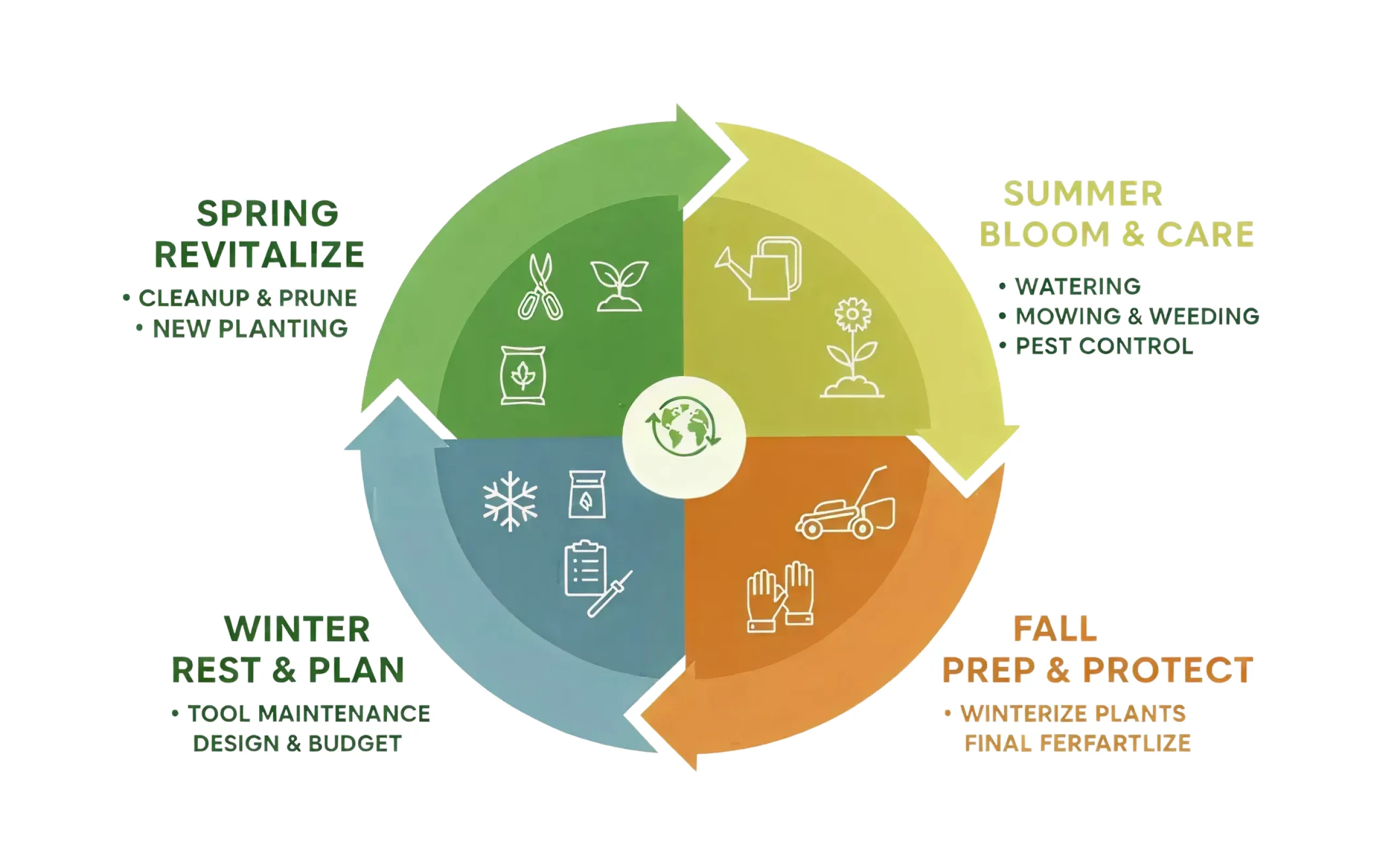
Spring and fall cleanup services are comprehensive yard maintenance programs tailored to each season’s specific needs. These services address the mess and damage left by seasonal transitions and prepare your lawn and landscape for the months ahead.
In spring, the goal is to clear away winter debris, refresh your soil, and jumpstart new growth. In fall, the focus shifts to removing decaying plant material, trimming back growth, and preparing your lawn for winter protection.
Spring Cleanup Explained
Core Tasks in Spring Cleanup
Remove Debris
Winter often leaves behind branches, twigs, dead leaves, and garbage that can suffocate new growth.
Prune Dead Plants
Trimming damaged branches promotes healthier regrowth in the warmer months.
Lawn Aeration and Fertilization
Helps improve soil structure and nutrient absorption for a thicker, greener lawn.
Bed Preparation and Mulching
Re-defining bed edges and applying mulch improves aesthetics and moisture retention.
Why Spring Cleanup Matters
Spring cleanup sets the tone for the rest of the year. Neglecting it can lead to pest infestations, mold, and patchy lawns. A clean, revitalized yard creates a solid foundation for healthy growth all season.
Fall Cleanup Explained
Core Tasks in Fall Cleanup
Leaf and Debris Removal
Fallen leaves and organic matter can suffocate grass and harbor pests if not removed.
Final Lawn Mowing
Cutting the grass to its ideal height for winter prevents snow mold and promotes healthier spring growth.
Trimming Perennials and Shrubs
Prevents damage from snow load and encourages better bloom cycles next year.
Mulching Beds
Adds insulation to root systems and keeps soil temperatures stable during freezing nights.
Optional Gutter Cleaning
Prevents ice dams and water overflow during snow melts.
Why Fall Cleanup is Essential
Ignoring fall cleanup can lead to long-term damage. Accumulated debris becomes a breeding ground for pests and disease, while untrimmed plants and unmanaged lawns may not survive harsh winter conditions.
Spring vs. Fall Cleanup: What’s the Difference?
While both cleanups are vital, they focus on different goals.
Spring Cleanup
Removes winter buildup
Primes soil and grass for growth
Prepares beds for planting
Fall Cleanup
Clears leaves and decaying material
Prunes plants for dormancy
Protects your yard from winter damage
Understanding this distinction helps you get the timing right and schedule services when they have the most impact.
Seasonal Cleanup Checklist
Spring Cleanup Tasks
Remove debris and branches
Rake and dethatch lawn
Edge and mulch garden beds
Prune dead branches and plants
Aerate and fertilize the lawn
Fall Cleanup Tasks
Rake and remove all leaves
Final mow and lawn edging
Trim back perennials and shrubs
Apply mulch to protect roots
Optional fertilization for winter root strength
DIY vs. Professional Cleanup Services
Pros and Cons of DIY
Doing it yourself can save money but requires time, equipment, and physical labor. It’s easy to overlook important steps like soil testing or proper pruning techniques.
Why Hire Professionals
Expertise
Trained crews know exactly what your landscape needs.
Equipment
High-powered tools complete the job faster and more effectively.
Efficiency
What might take you a weekend, a pro can do in hours.
Debris Disposal
Avoid the hassle of bagging and hauling yard waste yourself.
When to Schedule Seasonal Cleanup Services
Spring Cleanup
Schedule as soon as the ground is dry and snow has melted, typically early to mid-spring depending on your region.
Fall Cleanup
Book after most leaves have fallen but before the ground begins to freeze, usually late October to early December.
Booking early ensures your yard gets attention before landscapers’ schedules fill up.
Benefits of Seasonal Cleanup for Your Property
Boosts Curb Appeal
A clean yard makes your home look well-maintained and attractive.
Improves Plant Health
Removing debris and pruning plants promotes better airflow and stronger regrowth.
Prevents Pest Problems
Many insects and rodents nest in unkempt yards.
Saves Money Long-Term
Proper seasonal care reduces the need for costly repairs or replacements in the future.
Frequently Asked Questions
How often should I schedule cleanup services?
At minimum, twice a year — once in spring, once in fall. Some properties may need more frequent touch-ups.
Do I need both spring and fall cleanup?
Yes. Each season addresses different needs. Skipping one may lead to more problems in the next.
What’s included in a professional cleanup?
Debris removal, pruning, edging, mulching, mowing, and optional add-ons like fertilizing and gutter cleaning.
Can I combine cleanup with other services?
Absolutely. Many homeowners pair seasonal cleanup with aeration, seeding, or landscaping upgrades.
Conclusion
A clean, well-prepared yard doesn’t just look great. It functions better, resists disease, and thrives across the seasons. In 2026, professional spring and fall cleanup services are more important than ever to protect your landscape and boost property value.
Don’t wait until your lawn is overwhelmed with leaves or choked by winter debris. Schedule your seasonal cleanup today and enjoy a healthier, more vibrant yard tomorrow.
Connect With Us
Website: Lenny’s Landscape
Facebook: Follow us on Facebook