
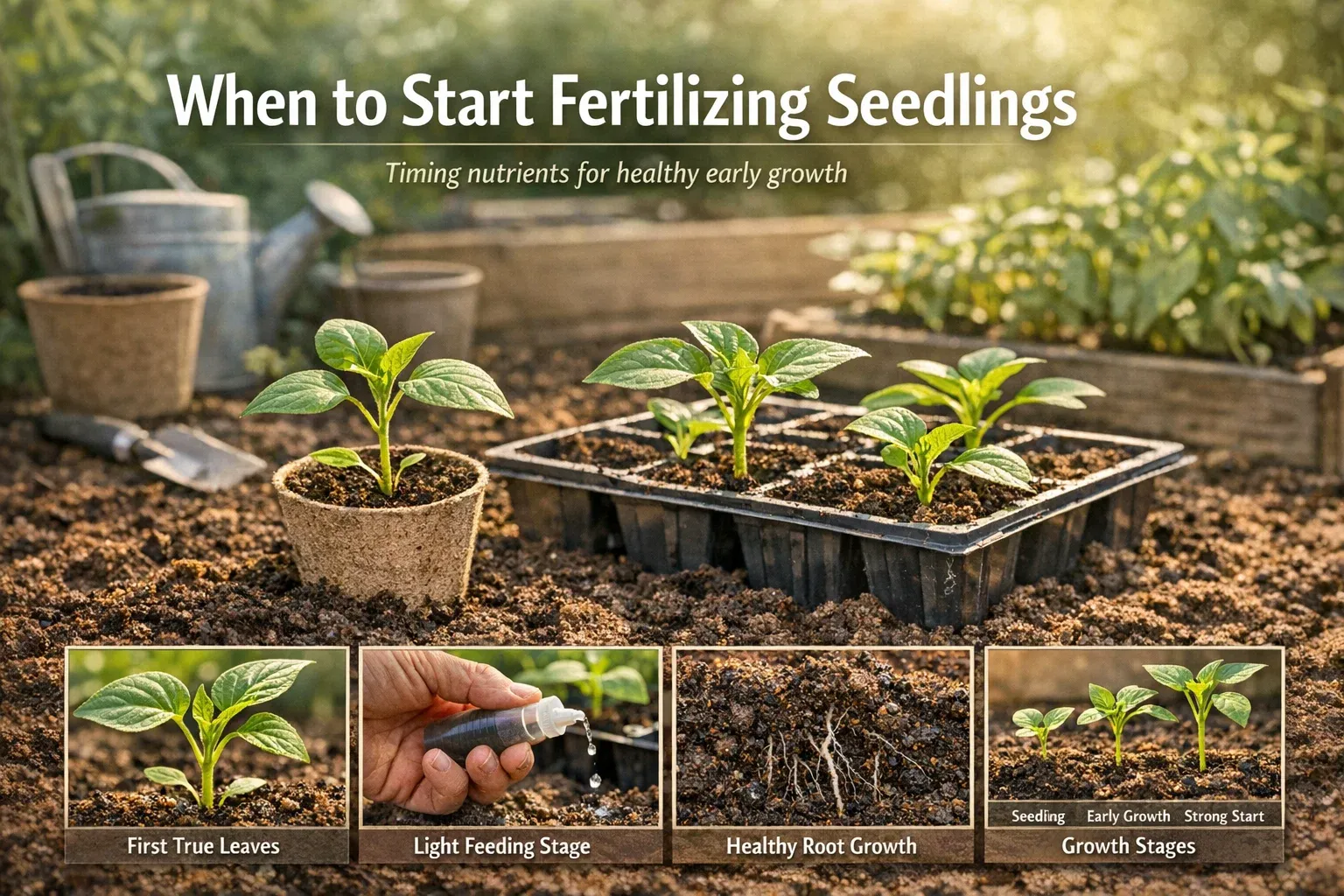
When to Start Fertilizing Seedlings
Fertilizing seedlings at the right time is one of the most important steps to growing strong healthy plants. Too soon and the fertilizer can damage delicate roots. Too late and seedlings may not get the nutrients they need to thrive. Knowing when to start fertilizing helps your garden grow faster and stay vigorous throughout the season.
In this guide you will learn exactly when to begin fertilizing seedlings and how to do it safely for the best results.
Why Timing Matters for Fertilizing Seedlings
Seedlings are young plants with small root systems and tender leaves. Their first nutrients come from seed energy and starter soil or seed mix. Fertilizing at the wrong time can burn roots or cause weak spindly growth.
Waiting until seedlings are ready ensures they can properly use nutrients to develop strong roots stems and foliage. Proper timing increases resilience to pests temperature changes and transplant shock.
Signs Your Seedlings Are Ready for Fertilizer
Instead of relying on dates or calendars you should start fertilizing seedlings when you see certain growth signs
Your seedlings have at least two sets of true leaves
True leaves are the leaves that appear after the first tiny seed leaves and look like the plant’s mature leaf shape.
The roots are established enough to absorb nutrients
This can be observed if seedlings are growing steadily without wilting after watering.
The stem is firm and upright
Weak floppy stems can mean seedlings are still developing and not ready for fertilizer.
Recommended Timing for Fertilizing Seedlings
Seedlings are usually ready for their first fertilizer when they have at least two sets of true leaves. Here’s a simple timeline
Start fertilizing once seedlings have two sets of true leaves
Use a mild fertilizer solution to avoid burning tender roots.
Begin at one quarter strength
Seedlings need gentle nutrients. A weak fertilizer solution is safe and effective.
Fertilize every one to two weeks
As seedlings grow and strengthen you can gradually increase frequency.
Adjust based on plant type
Some vegetable herbs and flowers may need more nutrients sooner than others.
How to Fertilize Seedlings Safely
Using the right fertilizer method keeps seedlings strong and avoids damage
Use a water soluble fertilizer labeled for seedlings or young plants
These fertilizers are easy for roots to absorb without overwhelming them.
Mix fertilizer at one quarter to half strength
Stronger solutions can burn roots and stunt growth.
Apply fertilizer when soil is moist not dry
Water your seedlings first then apply fertilizer to avoid shock.
Avoid getting fertilizer on leaves
Concentrated fertilizer on foliage can cause burns.
Organic Options for Seedling Fertilizer
If you prefer natural gardening here are safe organic alternatives
Compost tea
Diluted compost tea adds gentle nutrients and beneficial microbes.
Fish emulsion
A mild organic fertilizer rich in nitrogen that supports leafy growth.
Seaweed extract
Provides micronutrients and stimulates strong roots.
These organic options should also be used at low strength for young seedlings.
What Happens if You Fertilize Too Early
Fertilizing seedlings before they are ready can cause
Burned roots and leaf damage
Young roots are sensitive and strong fertilizer salts can injure them.
Stunted growth
Seedlings may stop growing if nutrients overwhelm them too soon.
Weak spindly plants
Too much fertilizer before the roots are developed can lead to weak stems and lower survival rates.
Final Recommendation: When to Start Fertilizing Seedlings
Begin fertilizing seedlings when they have at least two sets of true leaves and use a mild fertilizer solution. Gradually increase strength as plants grow stronger. Whether you use conventional fertilizer or organic options the right timing ensures healthier vibrant plants that are ready for transplant or full sun growing conditions.
Starting fertilization at the ideal time helps your garden flourish and gives your seedlings the nutrients they need without stress.
Frequently Asked Questions
What fertilizer is best for seedlings?
The best fertilizer for seedlings is a balanced, water-soluble fertilizer like 10-10-10 or 20-20-20, diluted to one-quarter strength. Organic options like fish emulsion or seaweed extract are also safe and effective.
How soon after seeding can I fertilize?
You can begin fertilizing once seedlings develop their second set of true leaves. This typically occurs 1 to 2 weeks after germination, depending on the plant type and growing conditions.
Is October too late to fertilize seedlings?
October can be too late to fertilize seedlings outdoors in cooler climates, as growth slows. However, indoor seedlings under grow lights can still benefit from light feeding if actively growing.
What happens if you fertilize too early?
Fertilizing too early can burn tender roots, cause stunted growth, and weaken seedlings. It’s best to wait until the plant is strong enough to handle nutrients.
Can you fertilize seedlings too early?
Yes. Fertilizing before the first set of true leaves appear can overwhelm the seedling, leading to root damage and poor development.
What are signs of fertilizer burn on seedlings?
Signs include brown or scorched leaf edges, curled or wilted leaves, yellowing, and sudden seedling collapse. If observed, stop fertilizing and flush the soil with clean water.
Connect With Us
Website: Lenny’s Landscape
Facebook: Follow us on Facebook