
Lawn Aeration Near Me: Why It Matters and How to Do It Right
If you’re looking for lawn aeration near me, you’re focused on improving soil health, grass growth, and overall lawn vibrancy. Lawn aeration is a proven lawn care treatment that addresses soil compaction and allows water, oxygen, and nutrients to reach grassroots where they matter most.
Whether you plan to do it yourself or hire a professional service, knowing what aeration is and when to do it ensures your lawn stays healthy, lush, and resilient year after year.
What Is Lawn Aeration?
Lawn aeration is the process of creating small holes in the soil to relieve compaction and improve air, water, and nutrient flow to grassroots. Core aeration removes small plugs of soil and thatch, opening pathways for roots to access essential elements for growth. Aeration also helps reduce thatch buildup and stimulates stronger root systems.
Why Lawn Aeration Matters
Compacted soil makes it hard for grass roots to breathe and absorb nutrients. When soil particles are pressed tightly together, water can pool on the surface or run off instead of soaking in. Aeration improves drainage and encourages deeper root development, which leads to thicker, greener grass that resists drought stress and disease.
When Should You Aerate Your Lawn?
The best time for lawn aeration depends on the type of grass you have.
For Cool‑Season Grasses
Lawns planted with cool-season grasses like Kentucky bluegrass, tall fescue, or ryegrass benefit most from aeration in early fall when the grass is actively growing and can recover quickly.
For Warm‑Season Grasses
Warm-season grasses such as Bermuda or Zoysia should be aerated in late spring or early summer during their peak growth period to support vigorous root growth.
For most lawns, once-a-year aeration is sufficient. However, lawns with heavy clay soil or high foot traffic may benefit from aeration every one to two years.
Signs Your Lawn Needs Aeration
You may need to aerate your lawn if:
-
The soil feels hard when pressed
-
Water often pools instead of draining
-
Grass looks thin despite regular care
-
Your lawn gets frequent foot traffic
These conditions point to compaction, which blocks oxygen, water, and nutrients from reaching the roots.
Professional vs. DIY Lawn Aeration
DIY Aeration
DIY aeration works well for smaller lawns. Manual tools like aerator shoes or hand aerators allow you to create holes in the soil yourself. These tools are more affordable and good for occasional use.
Professional Aeration Services
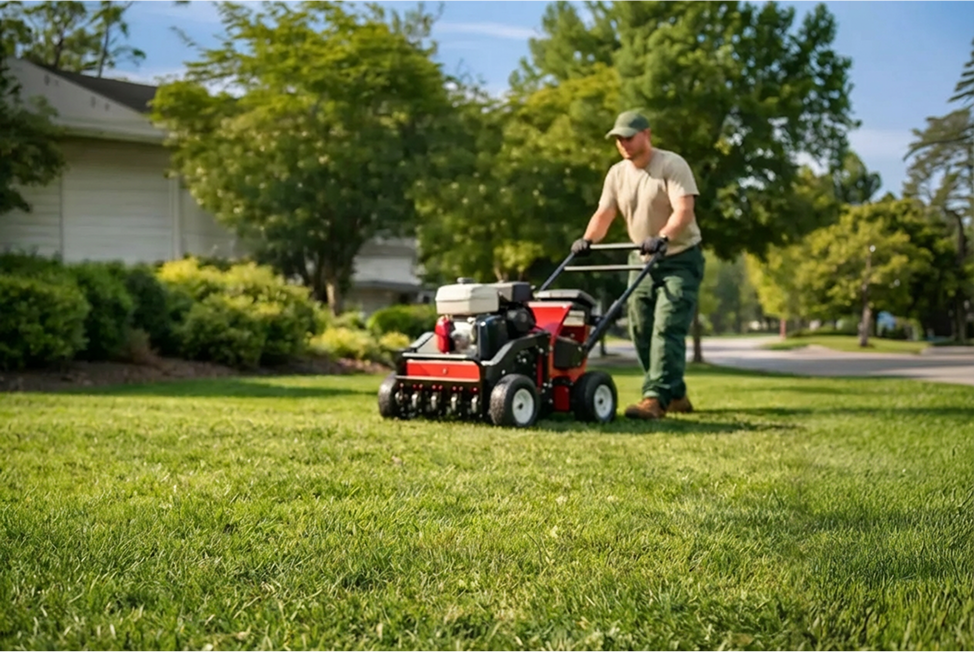
Hiring a professional service is ideal for larger lawns or severely compacted soil. Lawn care experts use power aerators that penetrate deeply and efficiently cover the entire lawn. Professional aeration saves time and ensures consistent results.
Benefits of Core Aeration
Lawn aeration offers multiple benefits:
-
Improves water and nutrient penetration
-
Enhances oxygen flow to grassroots
-
Encourages deeper root growth
-
Helps break down thatch naturally
-
Promotes a thicker, greener lawn
Core aeration is especially effective because it reduces compaction, allowing your lawn to absorb everything it needs for healthy growth.
Combining Aeration With Other Lawn Care Tasks
For best results, aeration is often paired with fertilizing and overseeding. After aeration, fertilizer can better reach soil and roots. Overseeding helps fill thin spots and makes your lawn more lush.
Aeration is also best done when soil is moist but not overly wet. Watering 24 to 48 hours before aeration helps the machine penetrate deeper without causing muddy messes.
Frequently Asked Questions
What month is best to aerate a lawn?
The best month to aerate your lawn depends on your grass type. For cool-season grasses, September is ideal. For warm-season grasses, late April to early June works best.
Is lawn aeration a good idea?
Yes, lawn aeration is highly beneficial. It relieves soil compaction, improves root growth, increases water and nutrient absorption, and helps your lawn grow thicker and healthier.
How can I aerate my grass?
You can aerate your grass using a manual core aerator, spike aerator shoes, or by hiring a professional lawn care company that uses a power core aerator for deeper and more effective results.
Is October too late to aerate a lawn?
October can still be a good time for aeration if you have cool-season grass and the weather is mild. Just ensure it’s done before the first frost for proper recovery.
How to tell if your lawn needs aerated?
Signs your lawn needs aeration include water pooling on the surface, thin grass growth, hard or compacted soil, and increased thatch buildup. Foot traffic and heavy clay soil also indicate a need for aeration.
Connect With Us
Website: Lenny’s Landscape
Facebook: Follow us on Facebook