
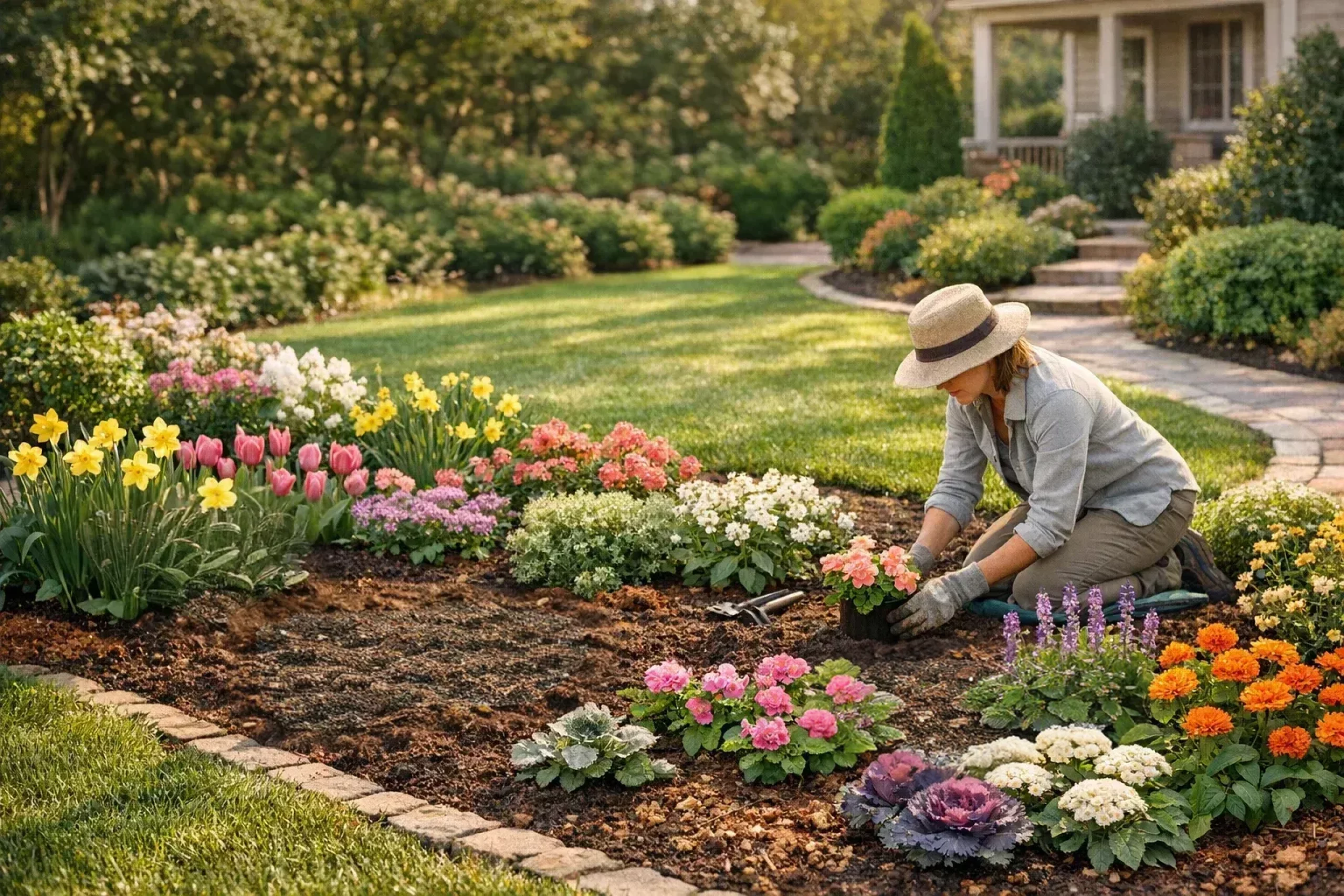
Planting Flowers: Tips for a Beautiful Garden Year‑Round
Planting flowers is one of the most rewarding parts of gardening. Whether you’re adding color to your front yard, creating a pollinator‑friendly garden, or designing a seasonal flowerbed, knowing how and when to plant flowers can make all the difference. This guide walks you through essential steps to plan, plant, and care for flowers so your garden thrives with vibrant blooms.
Choosing the Right Flowers
Successful flower planting starts with choosing plants that match your climate and growing conditions.
First consider sunlight: some flowers thrive in full sun while others prefer shade. Know your yard’s light patterns before selecting plants.
Perennials return year after year and provide long‑term structure. Annuals bloom all season long but complete their life cycle in one year. Mixing both can give your garden continuous color.
Preparing the Soil
Healthy soil creates healthy flowers. Before planting loosen the soil to improve drainage and root growth. Mix in compost or organic matter to boost nutrient levels. Test soil pH if possible so you choose flowers suited to your soil type.
Good soil holds moisture yet drains excess water to prevent root rot.
When to Plant Flowers
Planting time depends on flower type and local climate.
Spring and early summer are ideal for most annuals once frost risk has passed.
Fall planting works well for cool‑season perennials, giving roots time to establish before winter.
Plant bulbs in fall for spring blooms.
Plan your planting calendar based on local frost dates and flower preferences.
Planting Step by Step
Start by spacing plants according to their mature size. Crowded plants compete for nutrients and light.
Dig holes slightly bigger than the root ball and gently place each plant at soil level. Firm soil around roots and water immediately to settle soil and reduce transplant shock.
For best results add mulch around plants to retain moisture and suppress weeds.
Watering and Care
Newly planted flowers need consistent moisture until roots establish. Water deeply but avoid overwatering. Most plants prefer a deep soak rather than frequent shallow watering.
Once established water according to plant needs. Hot, dry weather usually requires more frequent watering.
Fertilizing Flowers
Use a balanced fertilizer formulated for flowers to promote healthy growth and blooming. Apply fertilizer following package instructions and avoid overfertilizing, which can hurt plant roots.
Many gardeners feed in early spring and mid‑summer to support peak growth.
Pruning and Deadheading
Deadheading, or removing spent blooms, encourages more flowers to develop. Prune leggy stems and cut back any damaged or diseased parts to promote plant vigor.
Regular grooming keeps your flowerbed tidy and flourishing.
Managing Pests and Diseases
Monitor your flowers for signs of pests or disease.
Natural remedies and targeted treatments help control insects or fungal issues. Clean up fallen leaves and debris to reduce pests and maintain plant health.
Frequently Asked Questions
How to plant the perfect flower garden
Start by choosing a sunny spot with healthy soil. Mix annuals and perennials for year-round color, group plants by height, and layer textures. Use mulch to retain moisture and reduce weeds. Keep a consistent watering and fertilizing schedule.
What are the four rules of flowers
Use the right plant in the right place, mix heights and colors, space flowers properly for airflow and growth, and maintain regular care including watering, deadheading, and feeding.
Which plant gives 12 months of flowers
Plants like lantana, certain geraniums, and impatiens in warm climates can bloom year-round. In cooler areas, rotating seasonal flowers in containers can give color throughout the year.
What is the best month to start planting flowers
In most regions, the best month is April or May after the last frost. For warm climates, planting can begin earlier. Fall is ideal for perennials that bloom the following spring.
What is the 3:5:8 rule in flower arranging
This design rule uses groupings of three, five, or eight to create visual balance. It applies to both garden layout and container planting, helping guide plant selection and spacing for a natural look.
What is the best order to plant a garden
Start by planting the largest and tallest plants in the back or center. Follow with medium-sized fillers and finish with shorter or trailing flowers along the edges. This creates depth and structure in the garden.
Connect With Us
Website: Lenny’s Landscape
Facebook: Follow us on Facebook