

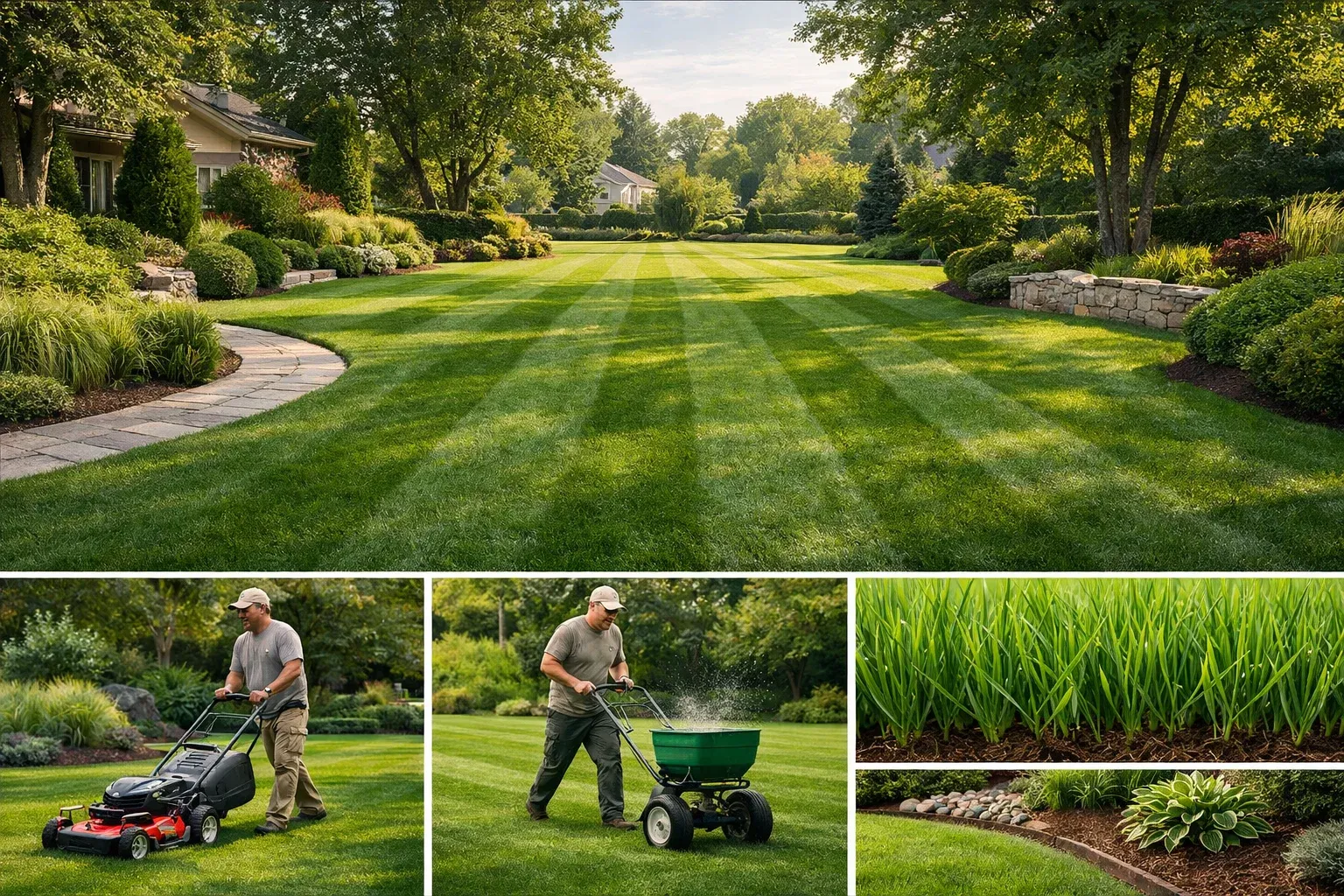
Should You Mow Before Fertilizing? Expert Lawn Care Guidance
If you’re wondering should you mow before fertilizing your lawn, you’re not alone. Proper lawn care technique is key to a healthy vibrant yard. Timing of mowing and fertilizing, especially in Morristown NJ’s changing seasons, can make a big difference in how well your lawn absorbs nutrients and performs through summer and fall.
In this guide, we’ll break down when to mow, why it matters before fertilizing, and the best practices to follow for a greener stronger lawn.
Why Mowing Matters Before Fertilizing
Mowing your lawn before applying fertilizer helps ensure that nutrients reach the grassroots where they’re needed most. When grass blades are too long, fertilizer may
• Sit on top of thick grass blades rather than reaching soil
• Break down slower reducing effectiveness
• Increase risk of burning grass if clumped
By mowing first, you create a uniform surface so fertilizer granules make direct contact with the soil and moist thatch layer. This improves uptake and boosts overall lawn health.
Best Practices: Mow Before Fertilizing
Here’s how to mow properly before applying fertilizer
1. Mow to the Right Height
Set your mower deck to the recommended grass height for your grass type. For most lawns this means keeping grass around 3 to 3.5 inches tall. Taller grass shades soil and retains moisture.
2. Avoid Cutting Too Short
Cutting grass too short is stressful for turf and can expose roots. Short grass also dries out faster and makes fertilizer less effective.
3. Sharpen Your Mower Blades
Dull blades tear grass instead of cleanly cutting it. A clean blade cut helps grass recover faster and absorb nutrients better after fertilization.
4. Remove Excess Clippings
If your lawn has heavy clippings rake or bag them. Thick clippings can prevent fertilizer granules from reaching the soil.
What Happens If You Fertilize Before Mowing
Fertilizing before mowing can still provide nutrients but it’s not ideal. Fertilizer spreading before mowing may
• Get caught in tall grass and clumps
• Wash off into runoff during watering or rain
• Not reach soil efficiently
The result may be uneven growth patchy green areas and wasted product.
When’s the Best Time to Fertilize
Timing depends on your grass type and climate but general recommendations include
Spring
Apply a slow release fertilizer after your first or second mow to encourage strong growth
Early Summer
Fertilizing now supports heat tolerance
Fall
One of the best times to fertilize as it promotes root strength for winter and green recovery in spring
Always follow label directions and avoid fertilizing during drought or extreme heat which can stress grass.
Watering After Fertilizing
Proper watering helps fertilizer break down and reach roots
• Water lightly within 24 hours after application
• Avoid heavy runoff you want moisture not movement
• Keep soil consistently moist for 48 to 72 hours
Additional Lawn Care Tips
To maximize lawn health
• Aerate compacted soil before fertilizing
• Apply weed control selectively
• Use a soil test to determine nutrient needs
• Mow regularly at the right height not too low
Final Answer: Should You Mow Before Fertilizing
Yes. Mowing before fertilizing ensures fertilizer reaches the soil and roots effectively, improves nutrient uptake, and promotes a lush green lawn. It’s an easy step that increases the value of every bag of fertilizer you apply.
Taking time with proper lawn care practices like mowing before fertilizing helps your turf thrive all season.
Connect With Us
Website: Lenny’s Landscape
Facebook: Follow us on Facebook